AI for Teachers
A hands-on afternoon on using AI safely, keeping assessment genuine, and cutting the busywork.
Co-presented by Benny Pan (InspiraEd) and Emma Humphrey, at Burnside High School.
What we covered
AI is already in your students' hands. This free afternoon helped Christchurch teachers meet that head-on — using AI safely, keeping assessment genuine in an AI world, and cutting the busywork.
Emma Humphrey opened on AI safety and mythbusting — what the tools actually collect, the real risks behind the headlines, and a practical safety framework for schools. Benny Pan then put the tools in teachers' hands: how generative AI really works, the Consumer-to-Co-Creator framework for assessment, a hands-on redesign sprint, and a productivity toolkit.
Everyone left with three things
- A visual framework for how students and teachers can use AI — with real use cases.
- Custom GPTs and Gems, ready to use for AI-policy drafting and prompting.
- Slash commands that save time.
The slides — yours to keep
Both presentations from the afternoon. Open them, share them with your department, use what helps.
-
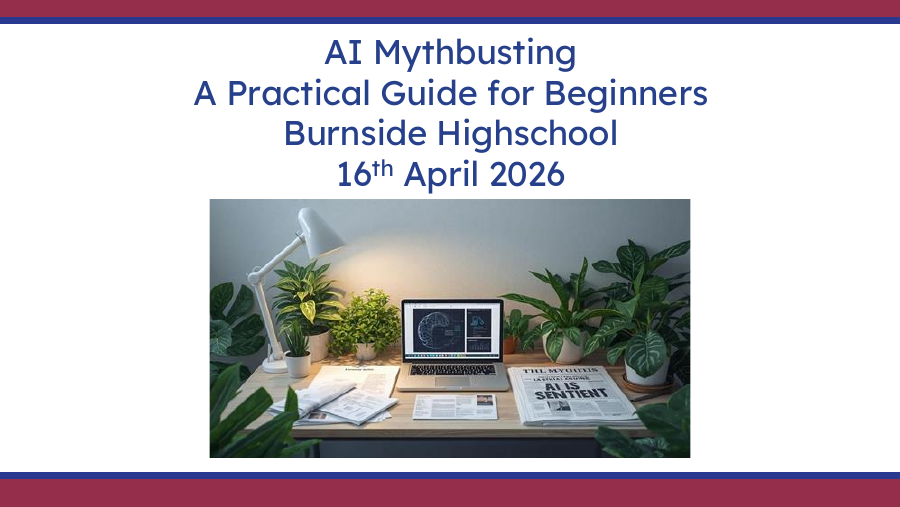 Emma Humphrey · Data Science & AI ConsultantAI Mythbusting — A Practical Guide for Beginners
 -
 Benny Pan · InspiraEdAI for Teachers — AI Safety, Authenticity & Redesigning Assessment
Shared with permission. These slides were prepared for the SCENZ AI in Science Teaching series — please credit the presenters if you reuse them.
The facilitators
-
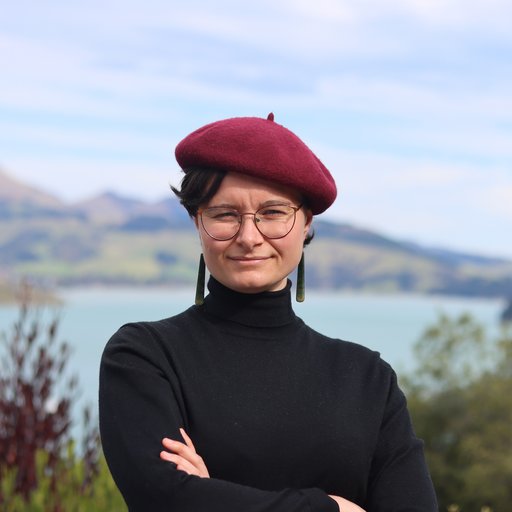 Facilitator Emma Humphrey Data Science & AI Consultant
Emma leads the Christchurch chapter of The AI Collective and runs the city's monthly AI Risk & Ethics meetup. She brings a safety-first, plain-English read on what AI can and can't do in schools.
On the day: opened on AI safety and mythbusting — what the tools collect, the real risks behind the hype, and a practical safety framework a school can actually put in place.
-
 Facilitator Benny Pan InspiraEd
Benny founded InspiraEd after years teaching senior science, and brings a fair-test, evidence-first lens — from an earlier career in clinical-trials pharmacy — to AI in education. He coordinates ASEF's international teacher-AI programme: 38 educators across 18 countries.
On the day: put the tools in teachers' hands — the Consumer-to-Co-Creator framework, a live prompting demo (bad prompt → good prompt), and a productivity toolkit.
How the afternoon flowed
Benny opens and hands to Emma — because before we put AI tools in teachers' hands, we need to know they're safe.
AI safety for schools — what data tools collect, the real harms, age-appropriate use and privacy — then a practical framework a school can actually put in place.
The five-level framework for AI in assessment, with a live prompting demo — the difference a good prompt makes, shown not told.
Three principles for assessment that holds up in an AI world — design authenticity in, value the process, make AI use explicit rather than hidden.
25 minutes in small groups on your own assessments — "could a student fake it?" — with Emma roaming the room as the safety lens.
Build a Custom GPT, try the slash commands, and set up the tools that cut planning time — with everyone's laptop open.
The one-page takeaway, co-led questions, and a thank-you to our prize sponsors before we close.
Who was in the room
A full house of Canterbury secondary teachers — the largest workshop of the series.
-
A full house
36 teachers from 11 schools, essentially booked out. Big clusters from Rangiora High, Burnside High and Cashmere, plus solo teachers from across the city.
-
Across the staffroom
Senior leaders and teachers from right across the subjects — only about one in five taught science. A whole-school conversation, not a science one.
-
The real worries
Four in five arrived worried about students misusing AI; one in four flagged data privacy. That's exactly where the afternoon started.
The final stop on InspiraEd's three-city Science Teacher AI Road Trip — Wellington, Dunedin, then Christchurch.
What teachers said
-
Great session. Benny helped me make a tool and was very knowledgeable and helpful. Being an actual teacher is all the difference. So worthwhile — will improve my teaching.
Christchurch teacher -
Time felt like it flew by. So good to have many questions about AI answered — and it affirmed the approach we are taking in our department.
Christchurch teacher -
I had deep kōrero in the hui with other participants and have been able to bring those conversations back to kura immediately.
Riccarton High School, Christchurch
Across the whole three-city series, 34 of the 36 teachers who completed the survey grew on every dimension — including a 56% lift in designing AI-resilient assessment.
On the day
Made free for teachers
This workshop was part of InspiraEd's Science Teacher AI Road Trip, co-presented with Emma Humphrey and made free for teachers by New Zealand's science subject associations.
- InspiraEd — Benny Pan designed and facilitated the workshop
- Emma Humphrey — co-facilitated on AI safety & mythbusting
- NZIC, NZIP & SCENZ — the subject associations that backed the series
- The AI Collective (Canterbury) — grew the room through local networks
- LearnCoach & Education Perfect — prize-draw sponsors
- Burnside High School — our host venue in Christchurch